What Cruise Passengers Should Know About Sanitation, Water Safety, and Illness Risks
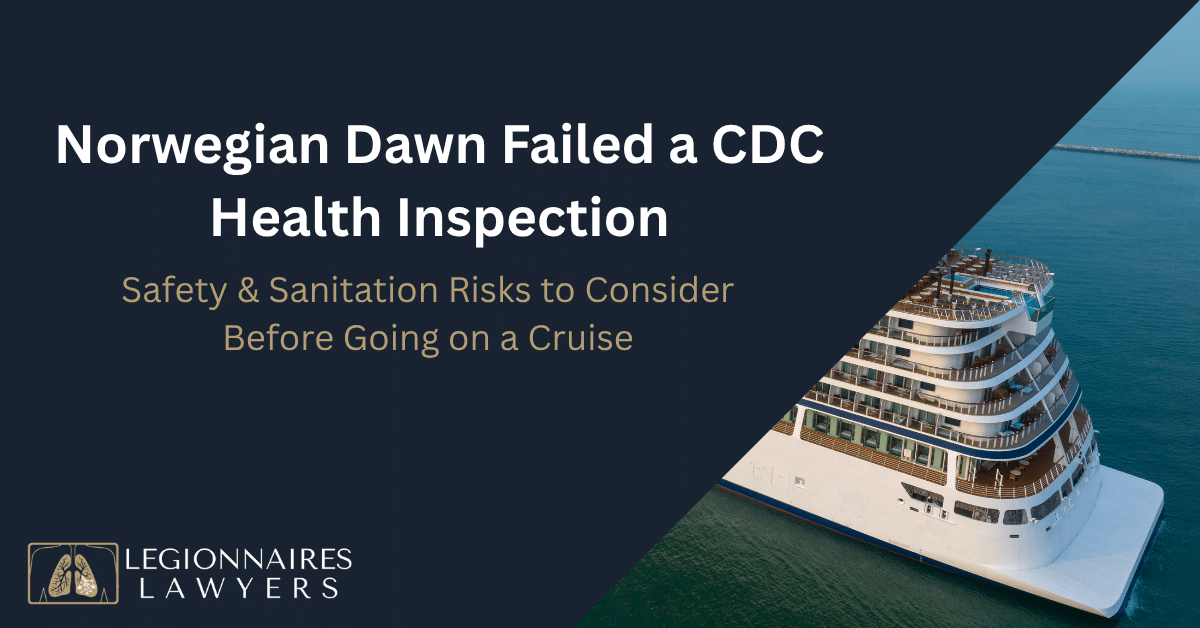
A recent CDC health inspection of the Norwegian Dawn has raised concerns about sanitation conditions aboard the cruise ship. According to reports, the ship received an unsatisfactory score of 84 during a March 29, 2026 inspection in Tampa, Florida.
While this inspection has not been reported as a Legionnaires’ disease outbreak, it is an important reminder that cruise ships, hotels, resorts, hospitals, apartment buildings, and other large facilities must carefully maintain their water and sanitation systems to help protect guests and the public.
At Legionnaires’ Lawyers, we represent people and families affected by Legionnaires’ disease outbreaks across the United States. We help individuals understand how these illnesses happen, what warning signs to watch for, and when legal responsibility may need to be investigated.
Why the Norwegian Dawn Inspection Matters
The CDC’s Vessel Sanitation Program inspects cruise ships that visit U.S. ports to evaluate public health and sanitation conditions. These inspections may review areas such as:
- Food storage and preparation areas
- Drinking water systems
- Pools, spas, and recreational water areas
- Medical facilities
- Housekeeping procedures
- Pest management
- Ventilation and sanitation practices
Reports about the Norwegian Dawn inspection described issues involving food safety, equipment cleanliness, refrigeration concerns, pest activity, and water-related maintenance problems.
For passengers, these types of findings can be concerning because cruise ships are shared environments where thousands of people may eat, sleep, bathe, and use recreational water systems in close quarters.
Can Poor Water Management Increase Legionnaires’ Disease Risk?
Legionnaires’ disease is a serious form of pneumonia caused by Legionella bacteria. People can become sick when they breathe in tiny water droplets, or mist, that contain the bacteria.
Legionella can grow in human-made water systems, including:
- Showers and faucets
- Hot tubs and spas
- Decorative fountains
- Large plumbing systems
- Cooling towers
- Water features and misting systems
Cruise ships, hotels, healthcare facilities, senior living communities, and large commercial buildings may have complex water systems that require careful maintenance. When water is not properly monitored, disinfected, heated, circulated, or maintained, Legionella may have an opportunity to grow and spread.
To learn more about how this disease develops, visit our Legionnaires’ disease overview.
Symptoms Passengers Should Watch For After Travel
Legionnaires’ disease symptoms can look similar to other respiratory illnesses, which is why it is important to seek medical care if symptoms develop after a possible exposure.
Common symptoms may include:
- Cough
- Fever
- Shortness of breath
- Chills
- Muscle aches
- Headache
- Fatigue
- Confusion
- Chest discomfort
Symptoms often appear within days after exposure, but timing can vary. Anyone who recently stayed on a cruise ship, at a hotel, in a hospital, or near a known outbreak location should tell their doctor about their travel and possible water exposure.
What Makes Legionnaires’ Disease Cases Different?
Legionnaires’ disease is not usually spread from person to person. Instead, cases are often connected to a contaminated water source.
That means an investigation may need to look at:
- Where the person traveled or stayed
- Whether other people became sick
- Whether a facility had prior water system issues
- Maintenance and cleaning records
- Water testing results
- Public health reports
- Whether reasonable safety steps were followed
These details can help determine whether illness may have been connected to a preventable water management failure.
For more information about how negligence may play a role, visit our page on Legionnaires’ disease negligence and liability.
Why Outbreak Investigations Matter
When multiple people become sick after visiting the same location, public health officials may investigate whether a shared water source is involved. These investigations can be especially important in places like cruise ships, hotels, hospitals, apartment complexes, workplaces, and assisted living facilities.
Legionnaires’ disease outbreaks have been reported across the United States in many types of buildings and public spaces. You can review more information about reported incidents on our Legionnaires’ disease outbreaks page.
Can People Affected by Legionnaires’ Disease Pursue Compensation?
People who become seriously ill from Legionnaires’ disease may face hospitalization, missed work, long-term breathing problems, medical bills, and other financial losses. In fatal cases, families may also be left with funeral costs and the emotional impact of losing a loved one.
Depending on the facts, compensation may involve losses related to:
- Medical treatment
- Hospitalization
- Lost income
- Pain and suffering
- Long-term health complications
- Wrongful death damages
Every case depends on the specific facts, medical evidence, exposure history, and available investigation records. To learn more, visit our page about Legionnaires’ disease compensation.
What To Do If You Became Sick After a Cruise, Hotel Stay, or Known Outbreak
If you or a loved one developed pneumonia-like symptoms after travel or after visiting a facility connected to water safety concerns, consider taking these steps:
- Seek medical care right away.
- Tell your doctor about recent travel, hotel stays, cruises, hospital visits, or possible exposure locations.
- Keep records of your diagnosis, test results, medical bills, and discharge paperwork.
- Write down where you stayed, dates of travel, and places where you used showers, spas, pools, or hot tubs.
- Report your illness to the appropriate health department if advised by your medical provider.
- Speak with a law firm that handles Legionnaires’ disease cases if you have questions about your rights.
Nationwide Help for Legionnaires’ Disease Victims
Legionnaires’ Lawyers represent individuals and families affected by Legionnaires’ disease outbreaks nationwide. Our team reviews exposure history, public health findings, facility records, and other evidence to help determine whether a preventable water safety failure may have contributed to illness.
If you or a loved one became sick after a cruise, hotel stay, healthcare visit, apartment exposure, workplace exposure, or known outbreak, you can contact Legionnaires’ Lawyers to discuss your situation.
This information is for general educational purposes only and does not create an attorney-client relationship. Prior results do not guarantee a similar outcome.